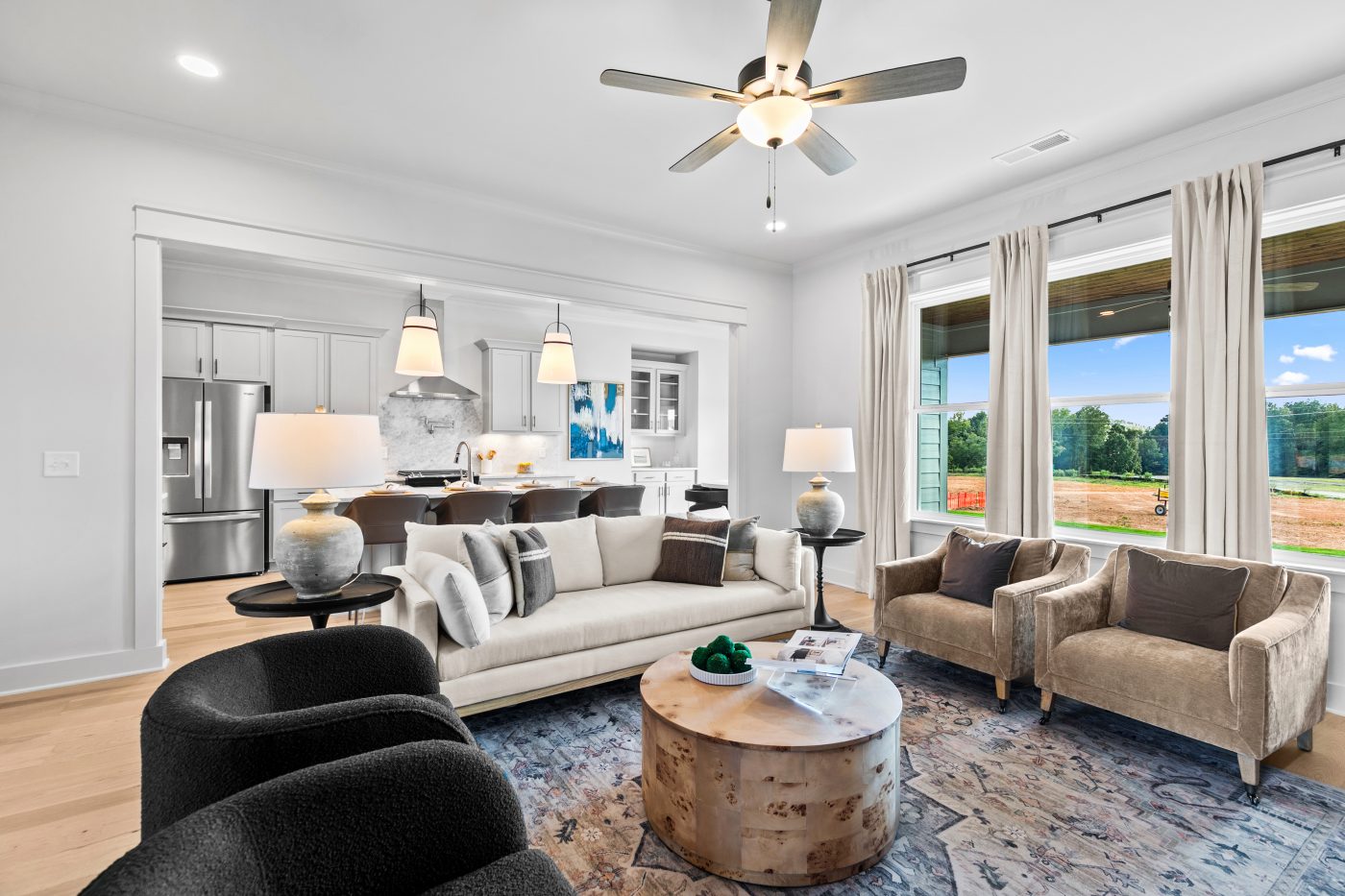
Homebuyers in 2026 are making more deliberate choices. Instead of defaulting to size alone, buyers are paying closer attention to how a home functions day to day and how it will age over time. Design trends are responding with more thoughtful layouts and quieter, more enduring aesthetics.
Here are the home design priorities shaping buyer expectations this year.
Flexible Living Spaces That Adapt Over Time
Buyers are gravitating toward floor plans with rooms that are clearly defined but not overly specialized. A study with double doors or a flex room near the main living area, like the one in our Bayside Plan, gives homeowners options without committing the space to a single use. This approach reflects a broader move away from overly open layouts toward homes that support focus, privacy, and flexibility.
Designing rooms that can change purpose helps homes stay relevant as lifestyles evolve.
Curb Appeal That Feels Intentional
Exterior design trends in 2026 favor balance and restraint. Clean rooflines, simple gable forms, and mixed materials such as painted brick paired with warm wood accents are replacing overly ornate exteriors. Black or bronze window frames, deeper porch overhangs, and intentional symmetry like the Poplar Plan help homes feel grounded and well-proportioned.
These details create curb appeal that feels considered rather than decorative.
Warm, Timeless Interior Finishes
Inside the home, buyers are responding to finishes that feel natural and calm. Wide-plank wood floors in lighter, neutral stains are continuing to replace darker tones. Soft whites, muted greiges, and subtle clay-inspired hues are being used to create interiors that feel warm without feeling heavy.
These choices give homes a sense of longevity and make personal decor easier to layer in over time.
Personalization With Structure
Buyers still value personalization, but they want clear boundaries. Curated design options such as a limited range of cabinet colors, consistent hardware finishes, or coordinated tile selections help homeowners customize their space without decision fatigue.
A structured design process allows homes to feel personal while maintaining a cohesive look.
Homes That Support Everyday Life
Well-being continues to influence home design in practical ways. Larger windows placed to maximize natural light, kitchens designed for real daily use rather than show, and gathering spaces that feel comfortable instead of oversized are shaping buyer preferences.
Homes that prioritize how people actually live tend to feel better long after move-in day.
Considering a new home this year?
At Tower Homes, we design homes with these priorities in mind, creating spaces that feel intentional, livable, and built to last.
Explore our communities and floor plans to see how thoughtful design comes together in homes built for real life.